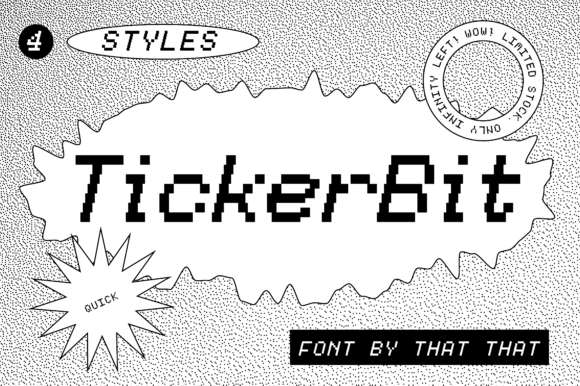
TickerBit: Your Digital Time Machine to the 90s Web
There’s a particular kind of nostalgia that hits when you think about the early internet. It’s not just the sound of a dial-up modem or the pixelated charm of a geocities page. It’s a visual language, a distinct aesthetic built from blocky pixels and bright, unapologetic colors. TickerBit, a premium font, captures that feeling perfectly. It’s not merely a display font; it’s a direct portal to that era, offering a vintage aesthetic that feels both authentic and surprisingly versatile for modern projects.
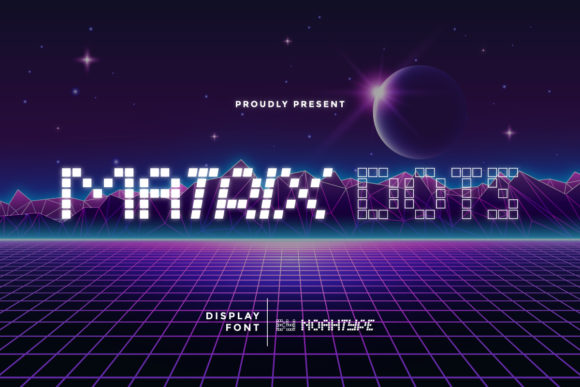
At its core, TickerBit is a pixel display font. This means its letterforms are constructed from a visible grid, giving each character a satisfyingly crisp, digital texture. Unlike overly distressed or grungy fonts, its personality is clean and functional, echoing the clarity of early computer interfaces and arcade signage. It has a straightforward, slightly techy charm without being cold. This balance makes it a unique creative font—it carries strong nostalgic connotations but avoids looking like a joke or a gimmick. It’s serious about its retro style.
Where This Retro Typeface Truly Shines
The strength of a font like TickerBit lies in its ability to set a specific, evocative tone. Think of it as a design shortcut for instant vintage credibility. For logo design, it can give a tech startup, indie game studio, or retro-themed brand an immediate identity that stands out from the sea of minimalist sans-serifs. Imagine a podcast about 90s culture or a boutique electronics brand—TickerBit provides a logo that tells the whole story at a glance.
Beyond logos, its applications are broad. In packaging design, it’s ideal for craft beer labels, snack foods, or any product aiming for a nostalgic, playful, or “hacker” vibe. For editorial design, it can create striking headlines in magazines or blogs covering technology, gaming, or pop culture history. It’s also a fantastic choice for social media graphics where you need a bold, scroll-stopping headline that feels energetic and fun. On merchandise like T-shirts, hats, and posters, TickerBit delivers that coveted vintage feel that resonates with audiences who appreciate a nod to the past.
However, its role is usually that of a specialist. As a display font, it’s built for impact, not for setting long paragraphs of body copy. Its pixel structure, while legible at larger sizes, can become tiring to read in small, dense text blocks. This is where understanding font pairing becomes crucial. TickerBit works beautifully alongside a clean, neutral sans serif font or even a simple serif font for body text. The contrast allows TickerBit to command attention in headlines and subheads while the supporting font ensures comfortable reading for longer content. This pairing strategy is a hallmark of professional modern typography.
Practical Guidance for Using TickerBit Effectively
Choosing any commercial font is an investment, so it’s wise to evaluate fit carefully. Start by asking: does the project’s core message align with a retro, digital, or nostalgic theme? If you’re designing for a law firm or a luxury wellness brand, TickerBit is likely not the right tool. But for a music festival, a retro gaming blog, or a brand that celebrates DIY tech culture, it could be the perfect design asset.
Always test the font in context. Mock up a headline, a logo, or a social media post. Check its readability on both screen and print. Pay attention to the included styles—does it have the weight variations you need? Does it include necessary punctuation and symbols for your language? A good premium font package will offer this versatility.
Licensing is another critical checkpoint. For any project that will be used commercially—whether for a client, selling merchandise, or in paid advertising—you must ensure you have the appropriate commercial font license. This isn’t just a legal formality; it’s about respecting the craft of the type designer and protecting your own work from future issues. Always read the license agreement to understand what’s permitted.
Finally, consider how TickerBit influences your broader brand identity. Used consistently, it can become a recognizable element that strengthens brand recall. It adds a layer of personality and storytelling, suggesting that your brand is approachable, creative, and perhaps doesn’t take itself too seriously. It can make a brand feel more human and connected to a shared cultural memory. In a crowded marketplace, that distinctive, authentic voice is invaluable. TickerBit isn’t just a set of letters; it’s a vibe, a memory, and a powerful tool for making a visual statement that truly connects.